On Keeping a Logbook
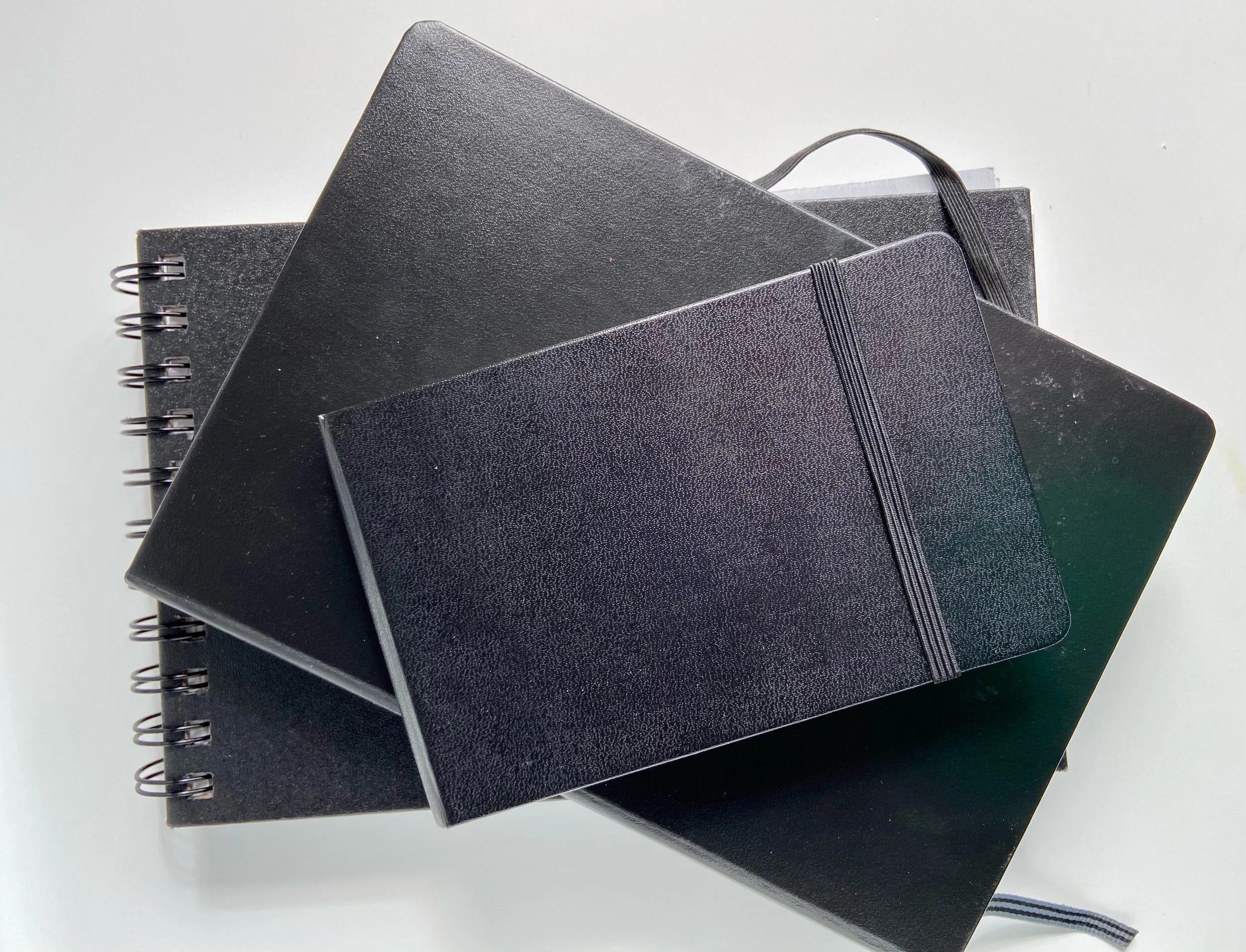
On January 1st, I started three new notebooks: a daily logbook, a small notebook that I carry with me everywhere, and what I’ve come to call my “field notes”, borrowing the term from my friend, Julie. It’s a system patterned after Austin Kleon’s notebook turducken.
Each of my notebooks has already proven transformative. This didn’t surprise me when it came to the small notebook. I’ve carried one sporadically in the past and know how critical it can be. The field notes have been a wonderful discovery for me. But, the notebook that has surprised me the most is my logbook.
From almost day one I have relished keeping my logbook, in a way that’s a little inexplicable to me. Loved it, really. It’s almost irrational, they way I enjoy jotting down my daily activities.
How I Keep My Logbook
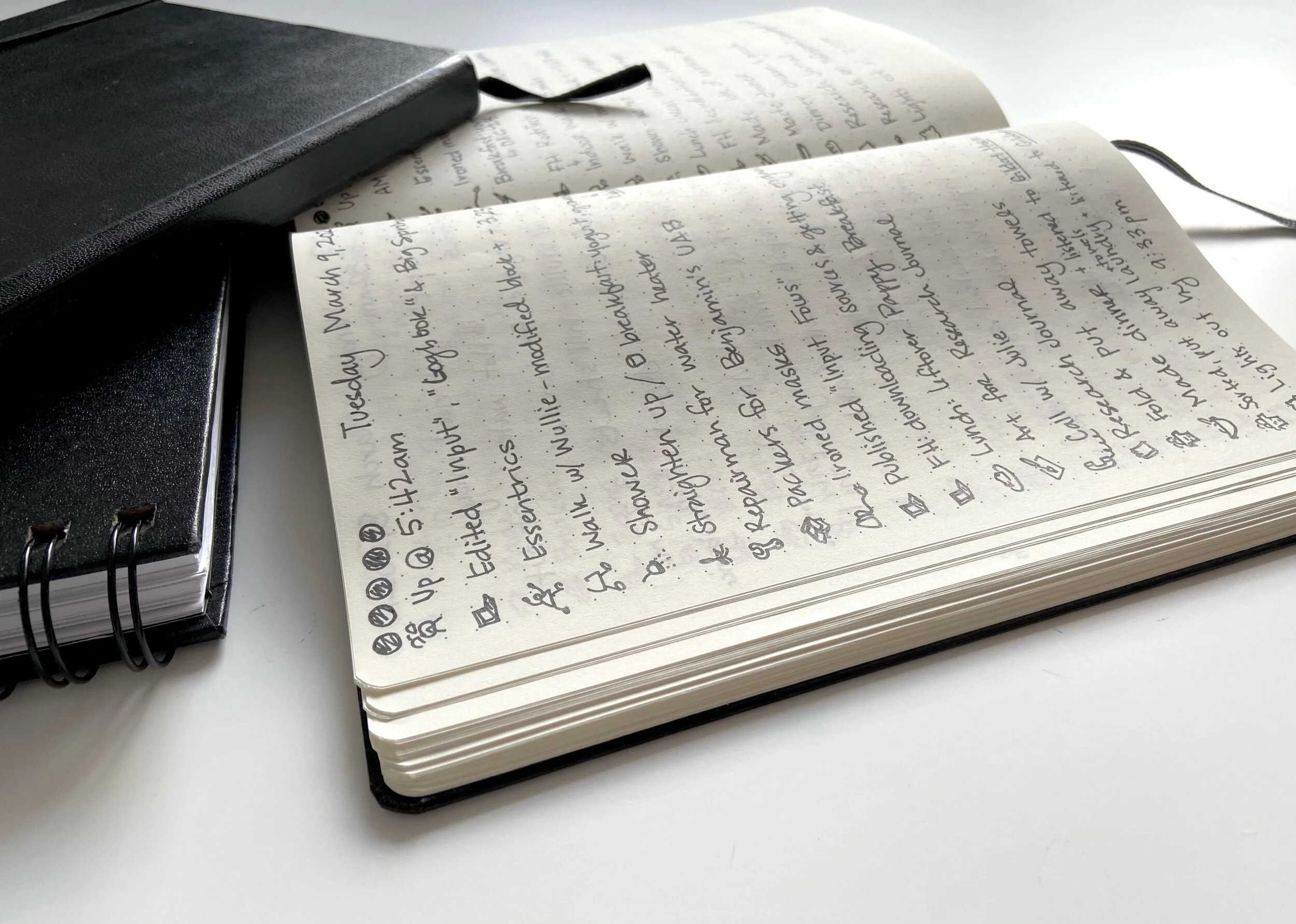
There isn’t any magic to the process. I simply write the date at the top of a blank page, then jot down what I’m up to throughout the day.
I draw little icons on the right, just because I want to. I enjoy the pseudo-consistency of having a library of icons so I can scan easily through my days. But, it isn’t necessary.
I always write when I woke up for the day and when I turned off the lights for the night. But this is not a sleep tracker. I usually record what I eat for my meals. But this is not a calorie counter. These are just things I happen to find interesting to note.
That is the sum total of the purpose of my logbook. It is about “noting”. It is not an attempt to measure or quantify. It is not a motivational tool. It is simply an observational instrument.
The simplicity of the process belies its profound impact, though. Just a few months in, I can already see how valuable this practice is.
My Logbook Holds all the Minutiae, so I Don’t Have To
It’s almost as though setting down the mundane details of my life allows me to not worry about them anymore, making space for other thoughts. I didn’t realize that I was trying to carry all of the minutiae around in my head. But, it’s undeniable that I have more headspace these days.
My logbook allows me to trust that the details exist somewhere, outside of my head, if I ever want or need to refer back to them. It’s somehow quite comforting to know that there is an accurate answer to the question, “When did this or that happen?”
My Logbook Is a Neutral Party
My logbook’s role is not to paint the most attractive version of my life. I’m not trying to impress anyone or burnish my reputation with it. It’s simply a place to hold the information, without comment and without judgement.
There’s no motivation to manipulate the data because I’m not trying to achieve some veneer of perfection. I’m simply collecting raw data.
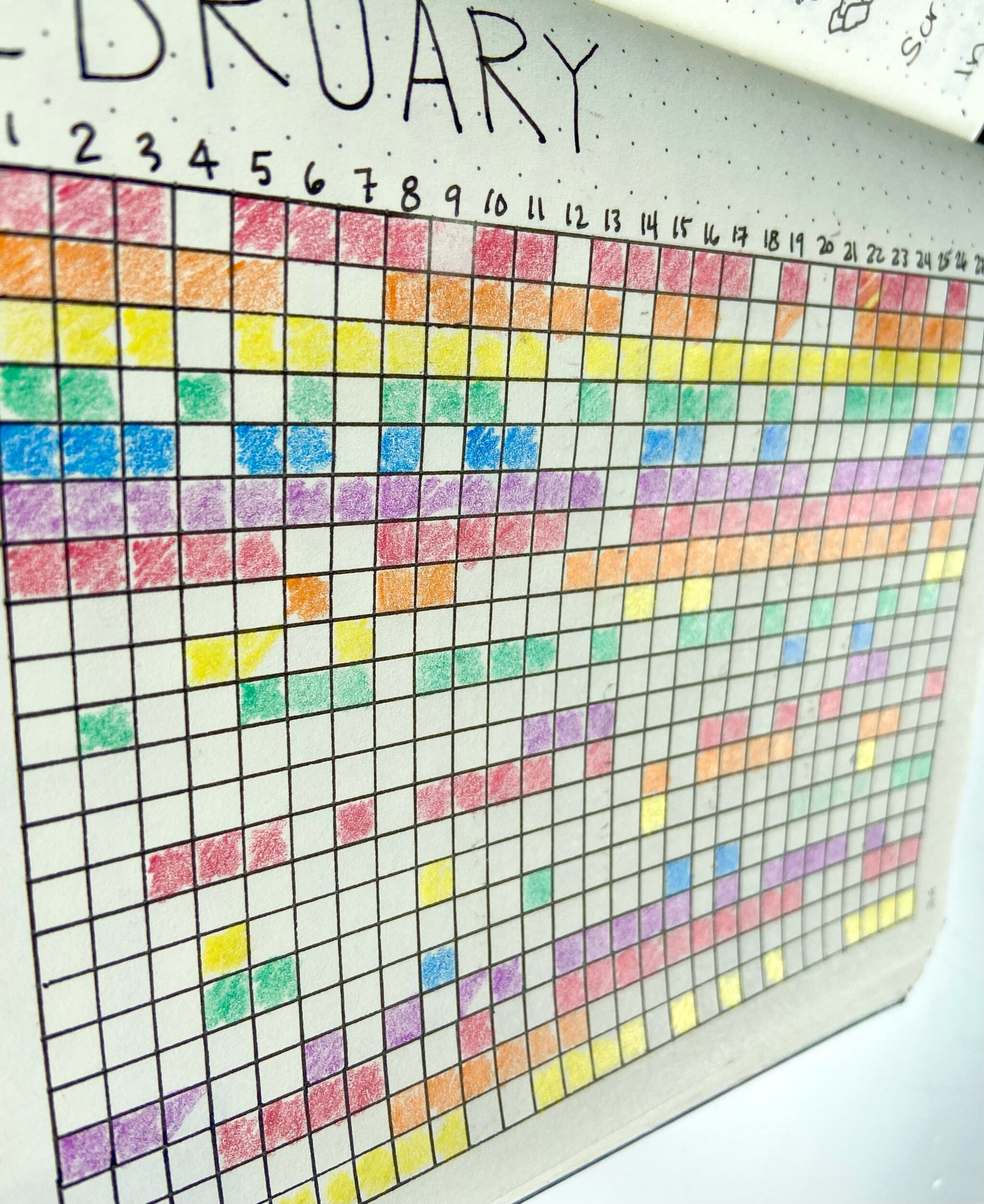
In February, I instituted a tracking page, where I color in boxes to quickly note various activities in my days. This can easily be confused as aspirational in nature. There is an obsession these days with the idea of maintaining a “streak”. Neat little rows of boxes will always appear to be calling out to be filled in with uniform continuity. But, that’s not my intention in the least. My tracker is simply a graphic form of noting. It’s just another way to gather information.
My Logbook Lets Me Look for Trends
I see my logbook not as an athlete’s list of records, but as a scientist’s lab book. I’m recording data. I may well later look at that data and draw inferences from it.
For example, how is my writing impacted by staying up late? If I choose to skip my morning walk, does it change my creativity? What about time on screens? Or time spent reading?
Despite the comparison to a lab book, I’m not asking these questions in a scientifically rigorous way. I’m not attempting to tease out correlation v. causation. I’m just looking for trends, and relationships between decisions and their outcomes. That way, I’m able to make sustainable changes that actually send me in the direction I want to go.
My Logbook Acts as a form of Objective Reality
Of course, my logbook will always be somewhat subjective, because I still choose what to note down and how it’s written. But, it does serve as something like a non-biased view of my days. My field notes are a record of my impressions, how I feel about things. But, my logbook is just information without comment.
It is already beginning to reveal interesting things to me. For example, at the moment, it feels like “I go nowhere and I do nothing”. My logbook insists that I do spend my time somewhere. And, it can point out exactly where that is. My tracker is showing me that certain practices that I thought I was struggling to be consistent with are actually already well-established parts of my days.
I’m finding it terribly helpful to have a tool that can help me discern the difference between my impressions of how things are going and the reality.
My Logbook Allows Me to Take Control of My Own Tracking
I acknowledge that we inhabit a world where my digital behavior, and, increasingly, my real world behavior, is constantly monitored and tracked. In that environment, the impulse for more tracking may seem a little odd. But, I find it all the more compelling because of the ever expanding external tracking. In this environment there is something really significant in doing my own analog tracking. There seems to me a fundamental difference between being tracked and noting for myself. I get to choose what I write down. I can apply my own lens to determine what is important to note and what is frivolous.
Despite my efforts to opt out at every chance possible, I know that some residual record of my days will exist in an external ether because I choose to engage with the modern world. So, it feels like I’m taking back some essential power when I choose to create my own version of an account of my days.